[ad_1]
After the collapse of FTX, Binance is on the middle of all of the controversies surrounding the introduction of a Proof of Reserves.
After FTX’s chapter, virtually all main crypto exchanges have began to supply a supposed proof that they don’t seem to be speculating with their clients’ funds and maintain them in full.
Since there is no such thing as a industry-wide commonplace for Proof of Reserves (PoR) but, the group is wanting notably critically on the exchanges’ strategy. And Changpeng Zhao’s Binance and its newest PoR are, after all, on the high of the listing.
The Wall Street Journal lately printed a report that comes down onerous on Binance. The change employed an outdoor accounting agency to organize a “proof-of-reserve report” protecting a few of its property and liabilities.
However, because the crypto group discovered, that is an “agreed-upon procedures engagement” (AUP), which is “not an audit, review or assurance engagement,” in line with the accounting agency.
— Dylan LeClair 🟠 (@DylanLeClair_) December 8, 2022
New Report Raises Questions About The Accounting Of Binance
The WSJ’s newest report additionally takes goal at this. It warns that buyers shouldn’t be glad with the report. Douglas Carmichael, an accounting professor at Baruch College in New York and former chief auditor of the U.S. Public Company Accounting Oversight Board defined:
I can’t think about it solutions all of the questions an investor would have in regards to the sufficiency of collateralization. That’s the primary factor it appears to talk to.
As the report notes, Binance is a personal firm that isn’t required to supply audited monetary statements and by no means has.
Also a purple flag, the report says, is that Binance Chief Strategy Officer Patrick Hillmann was unable to call Binance’s mum or dad firm, as Binance “has been undergoing a corporate restructuring for nearly two years.”
The PoR report is a five-page letter from a accomplice on the South African subsidiary of worldwide accounting agency Mazars and consists of three figures. However, these increase additional questions.
While the “customer liability report balance” determine was 597,602 bitcoins, Binance places its “asset balance report” at 582,486 bitcoins. The distinction apparently implies that Binance isn’t assembly its 1:1 ratio of reserves to buyer property:
The upshot is that the full bitcoin liabilities cited within the Mazars letter had been 3% better than the bitcoin property that had been included inside the scope of the report as of the reporting date, which was Nov. 22.
101% Collateralized?
The third determine “web legal responsibility stability (excluding property lent to clients) paints a completely different image. It reveals a legal responsibility determine that had been revised downward by about 21,860 BTC to 575,742 BTC.
The justification for this are buyer crypto property lent by way of loans or margin accounts, which led Mazar to conclude that Binance was “101% collateralized when the methodology was applied.”
Hal Schroeder, a former member of the Financial Accounting Standards Board (FASB) identified one other downside. According to him, the Mazars report is missing in that means as a result of it doesn’t embody details about the standard of Binance’s inside controls:
We don’t understand how good Binance’s techniques are to liquidate property to cowl any margin loans. And we all know that banks within the U.S. have been caught off guard every so often, regardless of all the great techniques in place.
Given what we’ve seen within the Bahamas, I don’t need to conclude that every one techniques are that good.
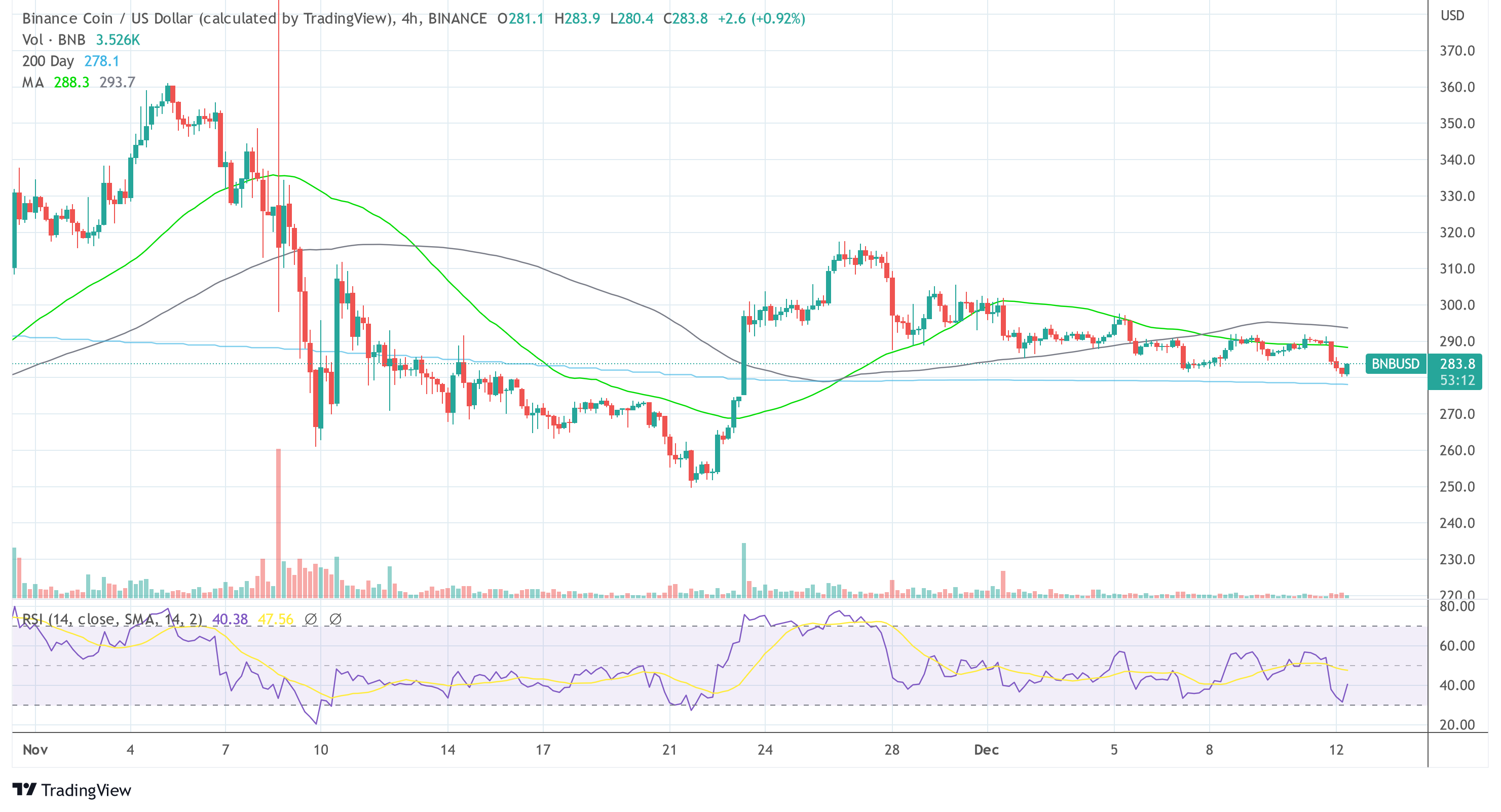
As of press time, the value of BNB was at $283.80.
[ad_2]
Source link