
[ad_1]
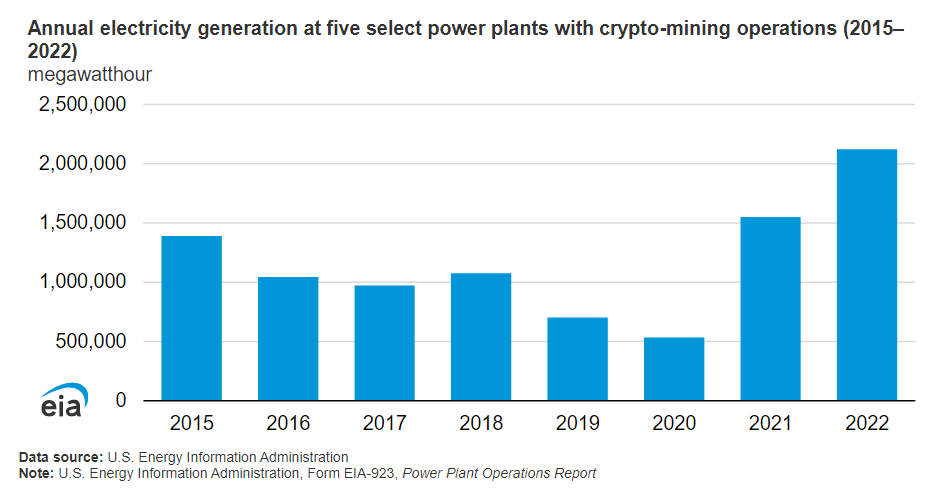
A current report launched by the US Energy Information Administration (EIA) has delivered to gentle the substantial electrical energy consumption related to Bitcoin mining operations throughout the nation.
The knowledge reveals that these operations are consuming between 0.6% to 2.3% of the nation’s complete electrical energy, a determine equal to the annual electrical energy wants of roughly 3-6 million American houses.
Growth Of Bitcoin Mining In The US
This surge in electrical energy utilization is primarily attributed to the fast development of Bitcoin mining within the United States, spurred by two key components.
Firstly, the Chinese authorities’s crackdown on cryptocurrency mining in 2021 prompted many operations to relocate to the US, the place extra favorable regulatory environments have been sought.
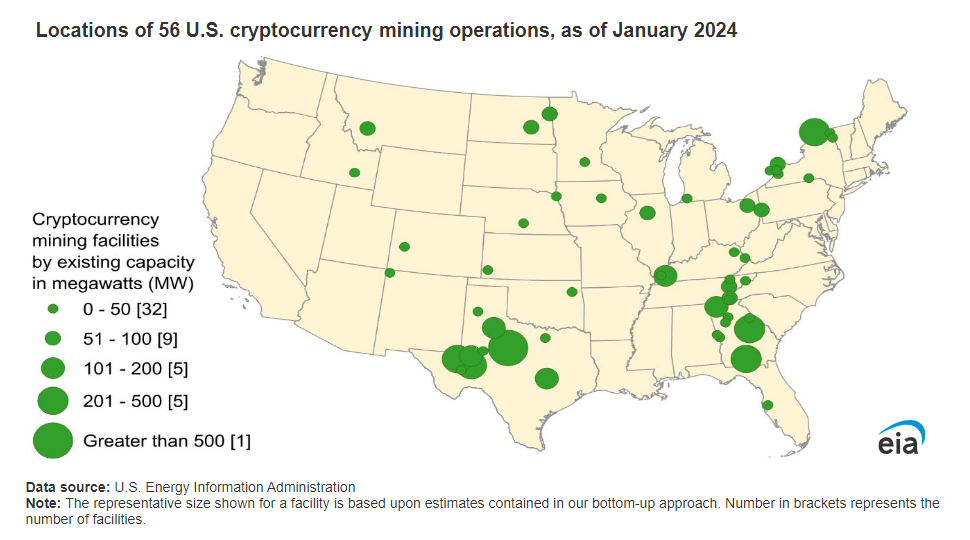
Secondly, a number of main Bitcoin mining corporations have gone public lately, establishing services in energy-rich states reminiscent of Texas and New York.
Despite the business’s claims of financial advantages and job creation, the escalating electrical energy consumption has raised issues amongst policymakers and grid planners.
Bitcoin presently buying and selling at $43,082 on the every day chart: TradingView.com
While the report acknowledges these apprehensions, it additionally presents the business’s perspective. Proponents of Bitcoin mining argue that their operations are comparatively “clean” and energy-efficient when in comparison with different industrial actions.
They emphasize using renewable vitality sources by many miners and level to the upcoming Bitcoin halving occasion, which could incentivize much more environment friendly mining practices.
Despite these arguments, specialists stay divided on the sustainability claims of the business. The energy-intensive nature of Bitcoin’s proof-of-work consensus mechanism continues to be some extent of rivalry, with the true environmental affect nonetheless topic to ongoing debate.
Additionally, the potential affect of the halving on vitality consumption necessitates additional monitoring and evaluation.
In essence, the current research revealing that Bitcoin mining accounts for two% of U.S. electrical energy consumption means that issues about its environmental affect could also be overblown.
While not insignificant, this fraction seems comparatively modest within the broader context of the nation’s various vitality portfolio. Nevertheless, ongoing scrutiny and a nuanced strategy are important because the cryptocurrency business navigates the fragile stability between technological innovation and environmental accountability.
Moving ahead, a balanced and data-driven strategy is crucial to navigate this complicated problem and make sure the accountable improvement of the cryptocurrency ecosystem.
Featured picture from Adobe Stock, chart from TradingView
[ad_2]
Source link